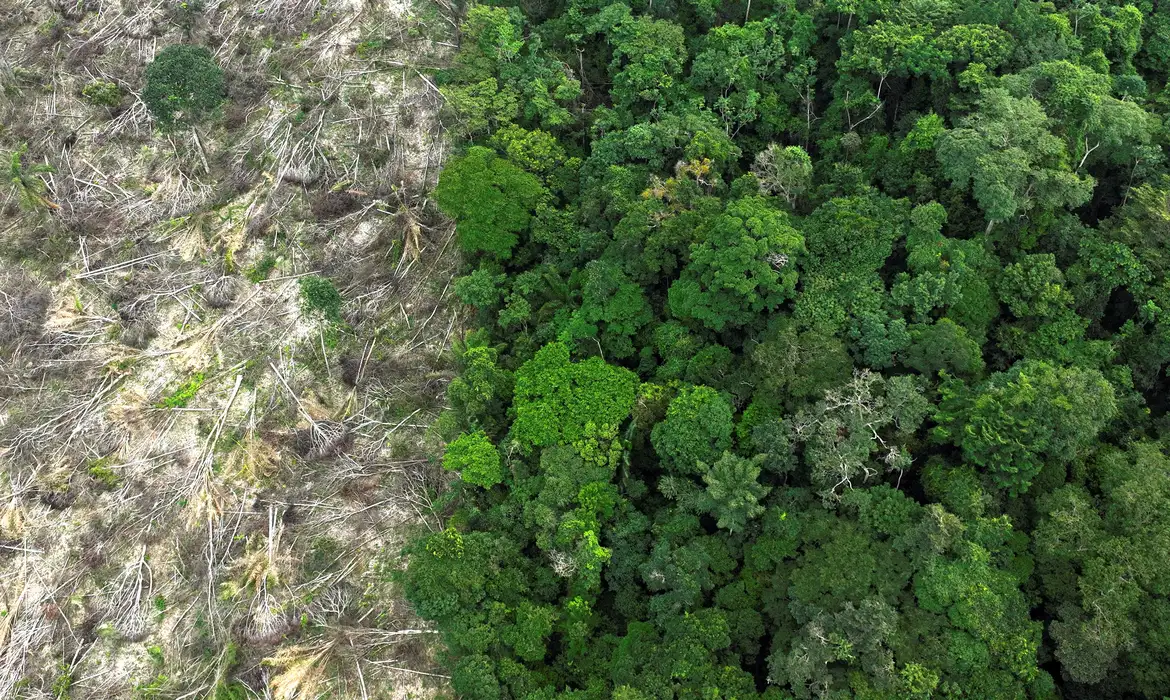
A study by Imazon mapped the illegal removal of wood in the state
 © Reuters/Ueslei Marcelino
Of the 68 thousand hectares where there is logging in Amazonas, 42 thousand did not have authorization from environmental agencies for the activity, according to a survey released this Friday (5) by the Imazon research institute. This means that 62% of the area with wood removal in the state is illegal.
Carried out annually by the Simex Network, composed of three environmental organizations - ICV, Imaflora and Imazon -, the research mapped the logging in the state through satellite images and crossed it with the authorizations for the activity issued by the environmental agencies, covering the period from August 2023 to July 2024.
In relation to the past survey (August/2022- July/2023), when 38 thousand hectares had wood exploitation without authorization, there was an increase of 9% in the area with illegal removal.
Researcher at the Amazon Monitoring Program at Imazon, Camila Damasceno assesses that the rise is extremely worrying since the illegal exploitation of timber ends up financing other environmental crimes, such as burnings and deforestation.
"In addition, it also harms the legalized timber market, which removes trees through sustainable forest management and generates jobs and taxes for Amazonas," she added.
Regarding authorized timber exploitation, Amazonas went from 11.3 thousand hectares between August 2022 and July 2023 to 26.1 thousand hectares between August 2023 and July 2024, which represents a 131% increase.
Boca do Acre
Only two municipalities in the south of the state - Boca do Acre and Lábrea - concentrate 75% of all illegal logging in Amazonas. Ranking leader, Boca do Acre had 20.5 thousand hectares of irregular exploitation, while Lábrea had 10.9 thousand hectares with illegal wood removal.
"These municipalities are within the agricultural expansion region called Amacro, on the border of Amazonas with Acre and Rondônia. Therefore, we warn that the extraction of wood in these territories may indicate future deforestation for land grabbing or for the production of grains and cattle, which reinforces the need to expand inspection in these municipalities and block the entry of illegal products in the market," warned Camila.
Protected lands
The illegal exploitation of timber, said the researcher, invades protected areas of the state, such as indigenous lands and conservation units, which is a concern not only in relation to environmental degradation, but to the survival of the communities that occupy these places.
"The entry of invaders to remove timber from these territories threatens indigenous peoples and traditional communities, who depend on the standing forest to maintain their way of life," explained Camila.
The survey showed that 13% of irregular wood removal (5.6 thousand hectares) occurred in protected areas, 9% in indigenous lands (3.9 thousand hectares) and 4% in conservation units (1.6 thousand hectares). There was a 19% drop in illegal exploitation in protected areas in relation to the previous study, when 6.9 thousand hectares were mapped, of which 6.4 thousand in indigenous lands.
Despite the reduction, the irregular removal reached an area of over 5 thousand football fields within protected areas. Imazon points out that, in addition to carbon emissions resulting from degradation, there is loss of biodiversity and social conflicts with the illegal extraction of wood.
Rural properties present in public databases, such as the Rural Environmental Registry (CAR), the Land Management System (Sigef) and the Terra Legal Program, were responsible for 32.5 thousand hectares of the area with irregular wood exploitation, which represents 77% of the total. According to Imazon's assessment, this result shows that public agencies have data to inspect and punish illegal activity in these areas.
Another category that caught the researchers' attention in relation to illegal wood removal in Amazonas is that of non-designated public forests (FPNDs), with 3.3 thousand hectares (8%). FPNDs are areas of forest of public domain (Union, states or municipalities) that have not yet had their use officially defined, whether as a conservation unit or indigenous land.
"Therefore, allocating these lands to traditional peoples and communities or to conservation is an urgent action to protect the public and environmental heritage of the people of the Amazon and Brazilians," concluded the institute.